One of the most frustrating parts of early sobriety is how reasonable and determined you can feel in the morning — and how completely different things can feel later that same night.
A lot of people go into sobriety believing the main issue is discipline. If you want it badly enough, you should be able to force yourself through cravings with enough self-control. And if you keep struggling, it can start to feel personal. Like weakness, failure, or a lack of commitment.
But that explanation usually falls apart once you actually try to stop drinking.
Because you can want sobriety badly enough. You can be serious about quitting. Exhausted by the cycle. Completely sincere when you wake up in the morning and tell yourself you are not going to drink again. And then somehow, by evening, things feel entirely different. The clarity fades. The emotional resistance drops. The cravings suddenly feel much louder than the logical reasons you had only hours earlier.
That disconnect can feel confusing, and honestly, a little disturbing at first. It can make you wonder why your own mind seems to change so dramatically throughout the day.
But willpower is not a fixed resource. It changes depending on stress, exhaustion, routine, emotional overload, hunger, loneliness, overstimulation, and the habits your brain has repeated for years.
A craving is rarely just a random urge appearing out of nowhere. Most of the time, your brain is responding to familiar conditions it has learned to associate with relief.
That’s part of why quitting drinking is hard in ways people often underestimate. It is not just about making one good decision. It is about navigating dozens of small moments where exhaustion, routine, and emotional overwhelm quietly start pushing you back toward something familiar. And those moments often happen at night.
Why Willpower Feels Strong in the Morning — and Disappears at Night
Mornings are often when sobriety feels the clearest.
You wake up after poor sleep, anxiety, dehydration, regret, or just emotional exhaustion from another night of drinking, and the decision feels obvious. Of course you want to stop. Of course you want your evenings back. Of course you want to feel healthier, calmer, more stable. But morning motivation exists in a very different emotional environment than nighttime cravings.
Earlier in the day, your brain is usually more rested. You have more cognitive energy available. The consequences of drinking still feel emotionally immediate. You can clearly remember how uncomfortable last night felt, and staying sober seems manageable because you are not actively fighting the craving yet. Then the rest of the day happens.
You deal with traffic, work, responsibilities, interruptions, messages, obligations, overstimulation, maybe emotions you have been pushing aside just to get through the day. By evening, you may be mentally depleted without fully realizing it. This is where decision fatigue starts becoming important.
Every decision you make throughout the day uses mental energy, even small ones. What to respond to. What to tolerate. What to prioritize. What to ignore. By nighttime, your brain naturally starts looking for familiar shortcuts and relief mechanisms. That’s why alcohol cravings often feel strongest during transitional moments.
Driving home from work. Finishing dinner. Sitting in the same chair you always drank in. Finally reaching the part of the day where nobody needs anything from you anymore. For a lot of people, that’s when the emotional flatness shows up.
Not necessarily dramatic sadness. Often it’s a strange emptiness. A feeling that the day is technically over, but your nervous system still feels unsettled somehow. You may realize you do not actually know how to transition into rest without alcohol because alcohol became the transition ritual. That matters more than it seems.
When drinking becomes attached to specific times, places, emotions, or routines, your brain starts anticipating it automatically. The craving can begin before you consciously decide anything at all. Sometimes this can make you feel like you secretly want alcohol more than sobriety. Usually, it is much more mechanical than that. Your brain is responding to patterns it recognizes.
Habits Usually Win Against Decisions
Human behavior is heavily driven by automation.
You probably do not consciously think through every step of your evening. Most people move through routines automatically because routines conserve mental energy. The brain prefers familiarity, especially when it is tired or stressed. That is one reason willpower sobriety approaches often break down over time. Decisions alone struggle against deeply conditioned habits.
Alcohol often becomes attached to emotional functions beyond intoxication itself. Relief. Permission to stop performing for the day. Numbing overstimulation. Escaping loneliness. Creating a sense of transition between “work mode” and “rest mode.” Even when you genuinely want to quit drinking, your brain may still associate alcohol with comfort or relief because that association has been reinforced repeatedly.
You may think: “If I really wanted sobriety, I wouldn’t be thinking about drinking this much.”
But cravings are often less about consciously wanting alcohol and more about your brain activating a learned response to discomfort, stress, exhaustion, or emotional emptiness. Wanting relief is not the same thing as wanting to give in to a life of drinking.
You can fully understand the damage alcohol is causing and still experience intense cravings because your brain has learned that drinking temporarily changes emotional states quickly. That conditioning does not disappear overnight simply because you made a decision in the morning. Especially during early sobriety, your brain is still expecting the old pattern to happen. You sit down after dinner and suddenly feel agitated without fully understanding why. Drinking starts sounding emotionally reasonable, even if it made no sense earlier in the day.
This is one reason relapse triggers can feel confusing. People often expect relapse to come from dramatic emotional breakdowns, but many relapses happen during extremely ordinary evenings. Nothing catastrophic happened. The routine simply activated itself.
Why “Just Use Self-Control” Usually Stops Working
People tend to imagine self-control as something stable and reliable, but emotional overload changes how the brain prioritizes things. When cravings become intense, long-term consequences can start feeling emotionally distant compared to the immediate desire for relief. That’s part of why quitting drinking can feel irrational sometimes. You can know with complete certainty that drinking will make tomorrow worse and still feel pulled toward it anyway because cravings temporarily shift your emotional focus toward immediate escape.
Early sobriety often involves a surprising amount of emotional rawness. Alcohol may have been covering anxiety, overstimulation, loneliness, boredom, burnout, or emotional exhaustion for a long time. Once drinking stops, those underlying states become more noticeable. Your nervous system needs time to adjust.
You may feel emotionally “off” at night even when nothing specific is wrong. The brain has not fully relearned how to settle itself naturally yet. Sleep can feel strange. Downtime can feel uncomfortable. Silence can feel loud. That discomfort is easy to underestimate until you experience it consistently.
Especially after work, you can reach a point where you no longer feel capable of making thoughtful decisions. You just want the day to stop pressing on you. And because alcohol previously became the shortcut for that feeling, your brain starts offering it automatically. Because that pathway is familiar.
Shame tends to make relapse cycles worse because it turns difficult moments into evidence of personal failure instead of recognizing them as predictable patterns that can actually be prepared for.
What Actually Helps More Than Willpower
One of the biggest shifts in recovery often happens when you stop trying to win cravings through raw self-control alone and start changing the conditions surrounding the craving itself. Because cravings are deeply connected to environment, timing, routine, and emotional state, practical changes usually help more than constant internal fighting. Reducing friction matters.
If alcohol is already in the house, already cold, already part of the nightly routine, there is very little interruption between craving and action. But if drinking requires additional steps, effort, time, or visibility, it creates space for the craving wave to pass instead of immediately turning into behavior. Structure matters much more than it may seem at first.
Open-ended evenings can become difficult in early sobriety because there is too much room for drifting back into automatic habits. You may assume sobriety simply means “not drinking,” but staying sober after work often requires rebuilding the emotional structure of your evenings.
That does not necessarily mean becoming hyper-productive or constantly busy. Usually the opposite works better. The goal is creating evenings that feel calming, intentional, and predictable enough that your nervous system stops constantly searching for relief.
That might mean planning your night ahead of time before cravings start. Not a strict schedule. Just a general structure.
Maybe dinner is followed by a walk. Then a shower. Then a comfort show you already picked out instead of endlessly scrolling while feeling restless. Maybe you make tea at the same time every night. Maybe you work on a hobby that keeps your hands occupied. Maybe you leave the house entirely during the hours cravings tend to feel strongest. A lot of recovery involves replacing transition rituals.
If alcohol used to signal “the day is over,” your brain often needs a new signal. Some people do surprisingly well with very simple calming routines because repetition itself starts becoming stabilizing over time. It also helps to make decisions before cravings happen instead of during them.
During a craving, your thinking often becomes emotionally narrowed. Rational thought gets quieter. Decision-making becomes harder. That is why many people benefit from pre-planned responses instead of relying on spontaneous self-control in the moment. One thing that helps many people in early sobriety is having a written response plan ready before cravings happen, because they are often predictable.
A structured tool can sometimes interrupt the feeling of spiraling or emotional tunnel vision long enough to regain perspective. That’s part of why this Craving Response Plan worksheet exists — to help create a calmer, more automatic response during difficult moments instead of trying to invent one while overwhelmed.
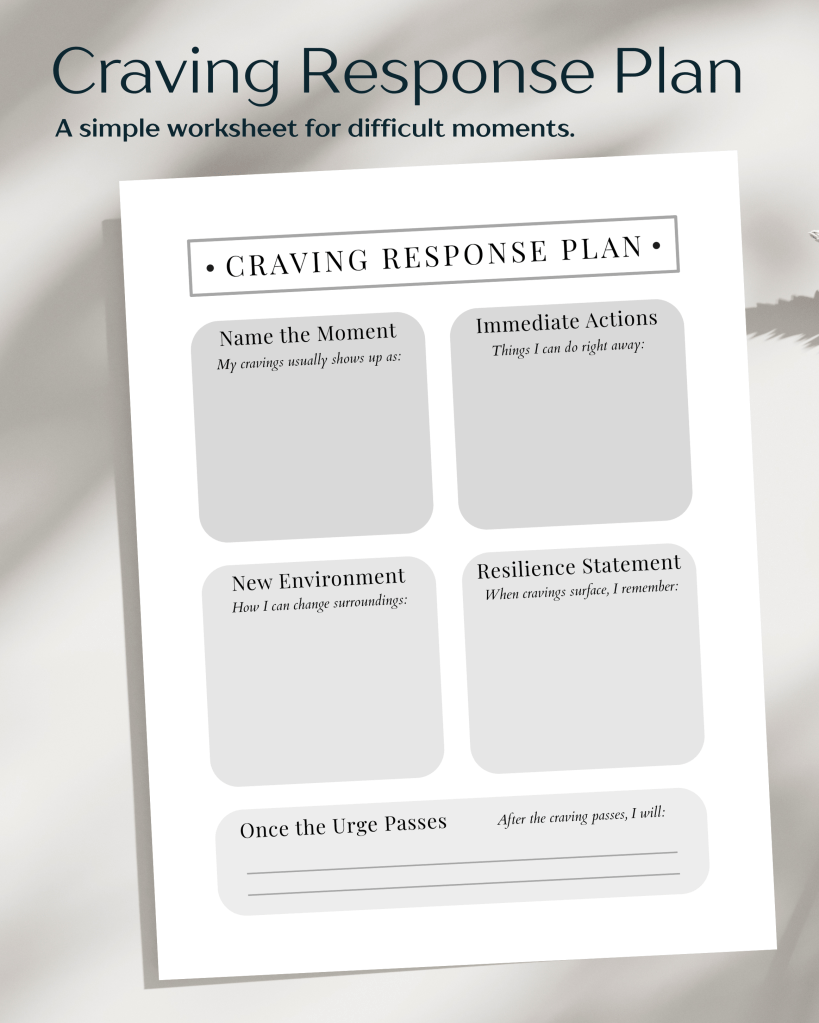
Sometimes even small interruptions matter more than you expect. And over time, those small changes accumulate. However you decide to create your planned response, having something you can immediately turn to in difficult moments can make all the difference. If you want something simple to reference during these moments, you can get the Craving Response Plan worksheet here.
The Goal Isn’t to “Be Strong Enough”
One of the more discouraging myths around sobriety motivation is the idea that successful recovery comes from becoming permanently stronger than cravings. For most people, that is not actually what happens. What usually happens is that life gradually becomes structured differently.
The routines change. Your nervous system stabilizes. Evenings stop feeling so emotionally loaded. Your brain slowly stops expecting alcohol as the automatic response to stress or restlessness. That process takes time, especially during early sobriety, but it does happen.
Eventually, many of the situations that once triggered cravings start feeling emotionally neutral again. Sitting in the same chair no longer automatically activates the urge to drink. Driving home after work stops feeling like the beginning of an internal battle every night. Sobriety becomes less about constant resistance and more about familiarity.
That distinction matters because white-knuckling forever is not a sustainable recovery model for most people. You tend to do better when your environment, routines, and coping systems support sobriety naturally instead of forcing you to rely entirely on moment-to-moment self-control. And that shift usually happens gradually, not all at once.
 Steady Next Step
Leave a comment