You may have expected quitting drinking to bring an immediate sense of relief.
You imagined clearer mornings, calmer evenings, better decisions, and the quiet satisfaction of finally doing something you had been thinking about for a long time. Some of that relief may have arrived. You might already feel grateful not to be waking up hungover, checking your phone with dread, or trying to remember exactly what happened the night before. But sobriety may also feel much harder than you expected.
Instead of feeling peaceful, you may feel restless. Your evenings might seem unusually long. Emotions that once passed beneath the surface may now feel difficult to escape. You may know that you do not want to return to drinking while still wondering why life has not started feeling noticeably better.
That doesn’t necessarily mean you made the wrong decision. It can just mean that alcohol had been doing more emotional and practical work in your life than you realized.Stopping drinking removes the alcohol. It does not immediately replace everything alcohol was being used for. Learning what belongs in that newly empty space is often where the more complicated part of sobriety begins.
Quitting Drinking Removes the Coping Tool Before Life Feels Different
Alcohol can become part of several moments throughout the day without you consciously assigning it a purpose. It may have marked the transition between work and home. It may have been a reward after a difficult shift, a way to make a quiet evening feel more interesting, or an automatic response to disappointment. It could soften social discomfort, interrupt racing thoughts, or make it easier not to care about something for a few hours. When you stop drinking, those needs do not disappear at the same time.
You may still come home tense from work, but now you do not know how to signal to your body that the workday is over. You may sit with an uncomfortable feeling without having your usual way to dull it. An evening that once seemed to pass quickly might suddenly stretch out in front of you. This can create a strange sense of emotional exposure. Nothing is necessarily going wrong, but nothing is covering the discomfort either.
That experience can be confusing, because you might have thought the difficult part was simply deciding not to drink. In reality, the decision is often followed by a series of smaller questions: How do I relax now? What do I do when I am bored? How do I get through the part of the evening when I used to start drinking?
A new way of decompressing will probably not feel as automatic or immediately effective as something you repeated for years. That does not make the replacement pointless. It means it is still unfamiliar. You do not need to reinvent your entire life at once. Sometimes the most useful place to start is the specific hour when things tend to become difficult.
Early Sobriety Can Make Feelings Louder
When alcohol is no longer interrupting your emotions, you may start noticing more of them. Even ordinary discomfort can feel more demanding when you are no longer used to sitting through it. You might become impatient with yourself for reacting strongly to things you think should not matter so much. That does not mean sobriety created every difficult feeling you are experiencing.
You can miss what alcohol seemed to provide without wanting the consequences back. Missing the temporary relief does not automatically mean you truly want to return to drinking. Sometimes it just means you have not yet found another reliable way to meet the need beneath the urge.
You might also feel pressure to be perpetually grateful that you stopped. When sobriety is described only as freedom, clarity, and personal transformation, it can be difficult to admit that you also feel disappointed, bored, or emotionally exhausted. But early sobriety can contain relief and discomfort at the same time.
The goal is not to treat every feeling as a sign that something is wrong. It is to become more familiar with what you are experiencing so that you can respond to it instead of automatically trying to make it disappear.
Progress Can Be Happening Before It Feels Rewarding
One of the most discouraging parts of early sobriety is that the effort can be obvious long before the reward is. Progress in this stage is often quieter than people imagine. It can look like waking up without adding another night of regret to your life. It can mean recognizing a craving before acting on it, leaving a situation that feels risky, or noticing that stress is a trigger instead of assuming you simply lack discipline.
You may begin sleeping differently, remembering more of your evenings, or making decisions you do not need to repair the next morning. You may be developing a more honest understanding of your patterns even before you know what to do with that understanding.
These changes don’t always create an immediate emotional payoff. At first, sobriety can feel repetitive: another evening, another urge, another decision not to drink. There may be no dramatic turning point that confirms you are doing everything correctly. Still, each time you respond differently, you are gathering evidence that you can.
That is part of rebuilding self-trust. It usually doesn’t arrive as a sudden feeling of confidence. It develops through repeated experiences of keeping a promise to yourself, adjusting when something is not working, and continuing after difficult days.
Tracking those changes can help when your mind insists that nothing is improving. Why Tracking Your Sobriety Helps in the First 90 Days explains how making progress visible can give you a more accurate picture than relying on motivation or memory alone. The purpose of tracking is not to turn sobriety into a perfect streak you are afraid to disrupt. It is to notice effort that might otherwise disappear into the background.
Willpower Alone Starts to Feel Exhausting
For a while, “I am not going to drink” might feel like enough of a plan. But when it is the only strategy available, every difficult moment has to be negotiated from the beginning.
You have to decide what to do after work. You have to argue with a craving when you are already tired. You have to remember why you stopped during a moment when drinking seems easier than staying uncomfortable. You might spend so much energy resisting alcohol that there is little attention left for anything else. This is one reason sobriety can begin to feel harder after the initial determination wears off.
Willpower changes from day to day. It is affected by stress, hunger, loneliness, sleep, conflict, and how many other decisions you have already made. Depending on it exclusively can make every urge feel like a test of your character. A little structure reduces how often you have to take that test.
Structure might mean deciding in advance what you will do during the first hour after work. It could involve keeping nonalcoholic drinks and easy food available, avoiding a certain store for a while, writing down who you can contact, or having a specific response ready when a craving begins. These actions may seem small compared with the size of the problem. Their usefulness comes from being available before your thinking becomes narrow and overwhelmed.
What Helps When Sobriety Feels Harder Than Expected
When you’re discouraged, it’s easy to start searching for one major change that will make sobriety feel easier. Often, the more helpful approach is to reduce friction in a few predictable places.
Give your evenings a basic shape
An evening routine does not need to be productive or impressive. Its purpose is to keep the hours from feeling completely unstructured.
You might eat soon after getting home, change into comfortable clothes, take a shower, watch something familiar, walk your dog, work on a low-pressure activity, or go to bed earlier than usual. The routine can be simple. What matters is that you are not reaching the most vulnerable part of the evening with no plan except to resist drinking.
Keep your reasons somewhere you can see them
Memory can become selective during a craving. You may remember the relief of the first drink more easily than the anxiety, arguments, lost time, physical discomfort, or disappointment that followed it.
Writing down why you stopped gives you something more reliable to return to. Include specific details rather than only broad statements such as “I want to be healthier.” What was drinking actually doing to your mornings, finances, relationships, energy, or sense of control?
You are not trying to frighten or shame yourself. You are preserving information that becomes harder to access when the urge for immediate relief takes over.
Prepare for cravings while you are feeling clear
A craving plan is easier to make before you need it. Consider where you tend to be, what time cravings usually happen, and what emotion often appears beforehand. Then choose a few actions that are realistic in that setting.
Your plan might include eating something, changing locations, delaying any decision for twenty minutes, texting someone, taking a shower, or putting on a show that reliably holds your attention. The best response is not always the most meaningful one. Sometimes it is simply the one you will actually use.
Make progress visible
A calendar, journal, tracker, or short nightly note can help you see what your mind overlooks.
You might record the sober day, one difficult moment you handled, and one thing that helped. Or, a simple tracker to keep record of your sober streak. This creates a practical record of patterns over time. It can also remind you that a bad mood does not erase the work you have already done.
Use support in a form that fits you
Support does not have to look one particular way. Traditional recovery groups are valuable for some people and not right for others.
Your support might come from a trusted friend, a therapist, a doctor, an online community, a recovery-focused book, or one person who knows what you are trying to change. It may also involve professional medical support, especially if you are concerned about withdrawal, your mental health, or your ability to stop safely.
Doing sobriety in a self-directed way does not mean you must handle every difficult moment in complete isolation. You can see a list of some of the help services available on the Resources Page.
Reduce the size of the problem
When sobriety feels hard, your mind may begin projecting the discomfort into the future: Will every weekend feel like this? Will I ever enjoy myself again? Am I supposed to do this forever?
Those questions are understandable, but they are rarely useful during a difficult evening. Return to the next concrete decision. Eat dinner. Get through the next hour. Leave the event. Go to bed. Write down what happened and adjust tomorrow’s plan. You can take sobriety seriously without asking yourself to emotionally process the rest of your life tonight.
A Simple System Can Make Early Sobriety Feel Less Open-Ended
Early sobriety can become especially overwhelming when everything remains vague. You may know that you want to stop drinking but have not clearly written down why. You may intend to handle cravings differently without knowing what that will look like. You may want more structure while continuing to face each day without a plan you can return to. A simple system can make those pieces more visible.
The Sobriety Journal Kit is an optional printable resource for creating that kind of structure. It includes space to record your reasons for stopping, prepare responses to cravings, choose a daily anchor, track progress, and reflect on what is helping.
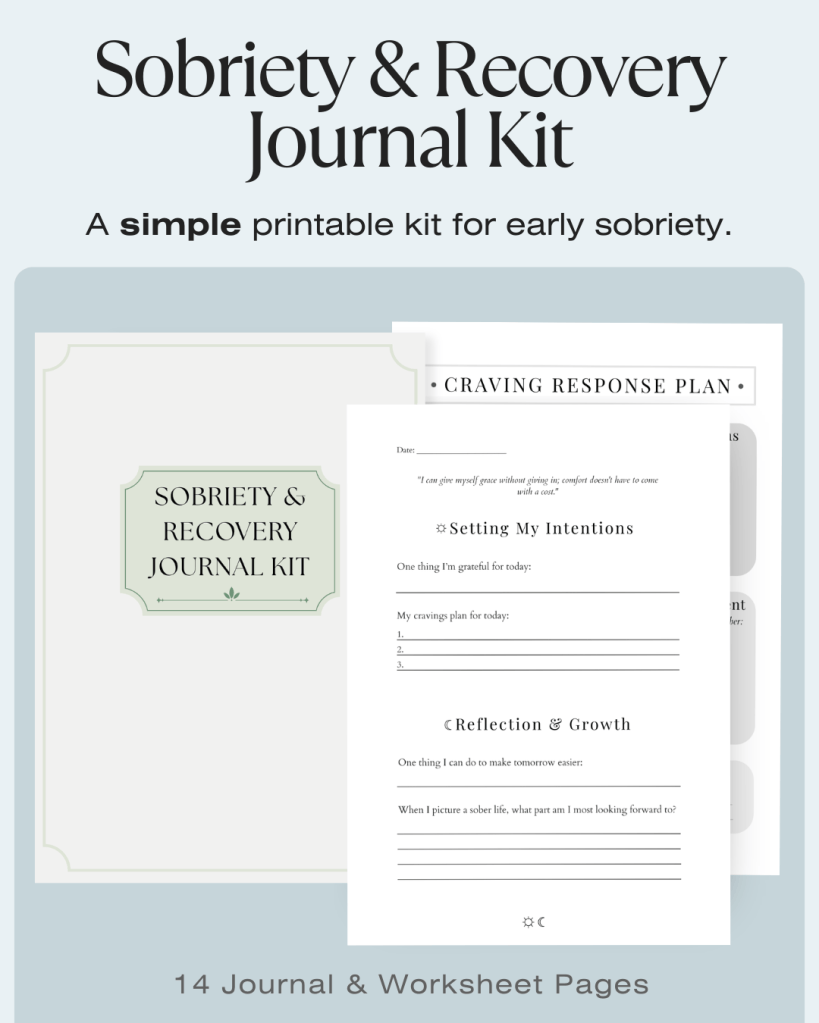
It is a simple, practical way to organize decisions that can otherwise feel scattered — particularly during moments when motivation is low and remembering your plan becomes harder.
Hard Does Not Mean Wrong
Sobriety feeling hard does not mean you are weak, failing, or incapable of continuing. Over time, the unfamiliar parts can become more ordinary. Evenings can develop a rhythm. Cravings can become more recognizable. You can learn which routines help, which situations make things harder, and what kind of support you are willing to accept.
Sobriety may gradually feel less like constant resistance and more like a life with structure, familiarity, and room to breathe. That change is not always immediate, and it may not happen in a perfectly steady line.
For now, it is enough to recognize that difficulty is not proof that you chose incorrectly. You do not have to feel strong every day to keep going. You only need enough steadiness to take the next honest step.
 Steady Next Step
Leave a comment