Trying to stop drinking without a support system can feel strangely invisible.
A lot of recovery advice assumes you have people around you who know what you’re trying to do. Supportive family, meetings, or just checking in. Someone noticing the days you make it through. But many people are trying to quit alcohol in a much quieter way, and there are several reasons why that might be.
Maybe nobody in your life fully knows how much you’ve been drinking. The people around you might not respond in a helpful way. You may have tried support groups before and they didn’t feel right. Or maybe you simply don’t have the kind of relationships where recovery feels safe to bring into the open. That does not mean you are doomed to fail. It does mean you may need a different kind of structure.
You may need to become more intentional about your environment, your routines, your reasons, and the way you keep yourself connected to the life you are trying to build. Quitting without a support system is not easy. It can feel lonely, especially in the beginning. But you do not need to have perfect confidence. You do not need a dramatic turning point that makes everything feel clear forever. You just need enough willingness to begin. And then, you need practical ways to keep coming back to that decision when your brain starts trying to talk you out of it.
Why Quitting Alone Can Feel So Overwhelming
One of the hardest parts of trying to stop drinking on your own is that nothing outside of you automatically changes. You may still come home to the same couch, the same evening routine, the same stores nearby, the same stress, and the same boredom. The world around you may look almost exactly the same, even though you are trying to make a major change inside it. That can be disorienting.
When drinking has become part of your routine, the habit often does not announce itself as a big decision. It feels far more automatic than that. You get home from work, tired, and the evening opens up. Nobody is watching. Nobody knows whether you drink or not. And because nobody sees it, nobody sees the effort it takes not to.
That invisibility can make sobriety feel heavier. When you get through a difficult craving, you have no one to tell. You make it through a night you normally would have spent drinking, and the next morning the world just keeps moving as if nothing happened. But something did happen: you interrupted a pattern. You made a choice that may have taken more energy than anyone else could understand from the outside. You practiced not reaching for the thing your brain expected and craved. That matters, even when there is no applause, no conversation, and no visible proof.
Evenings may feel longer. Silence may feel louder. Time may feel harder to fill. You realize how much of your day was quietly shaped around the expectation of drinking later. Not because you are weak, but because your brain and body learned a pattern. And when a pattern has been repeated enough times, changing it requires more than a vague promise to “do better.” It requires attention, repetition, and a plan for the moments when the old routine starts pulling at you.
You Do Not Need Meetings or a Huge Support Network to Recover
Support groups help many people. For some, meetings provide connection, accountability, honesty, and a sense of being understood in a way they have not experienced anywhere else. That is real, and it should not be dismissed. But support groups are not the only path to sobriety.
Some people feel helped by talking openly about alcohol. Other people feel more activated by constantly discussing it. Some people find community grounding. Others feel exposed, distracted, or overwhelmed by group settings. Some people need social accountability. Others need quiet structure, privacy, and space to rebuild trust with themselves before they can share the process with anyone else. There is no single recovery personality you have to become.
If meetings, groups, or public accountability do not feel right for you right now, that does not mean you aren’t serious. It does not mean you are avoiding recovery. It may simply mean that your sobriety needs to be built in a way that fits your nervous system, your life, and your actual circumstances. External support can help, but there is not one singular path to sobriety.
Sobriety is created through the choices you repeat. When you learn what makes drinking more likely and what makes it less likely. Over time you begin responding differently to cravings, stress, boredom, and old routines. Other people can support that process, but they cannot live your evenings for you. They cannot build the internal reasons that will matter when nobody else is around. That part has to become yours.
And while that may sound heavy at first, it can also become empowering over time. Because if your sobriety is not dependent on having the perfect support system, then it is not completely out of reach just because your life is quieter, more private, or less supported than someone else’s. You are allowed to recover in a way that looks quiet from the outside.
The Most Important Thing Is Knowing Why You Want to Quit
When you are trying to stop drinking without a support system, your reasons matter even more. Not in a vague, inspirational way. In a very practical way.
Cravings distort memory. So does stress. So does a bad day, or even a good day ending with loneliness. In the middle of an urge, your mind may start editing the story. It reminds you of the temporary relief, the looseness, the numbness, the escape. Conveniently, it leaves out the anxiety, the regret, the poor sleep, the wasted money, the arguments, the physical discomfort, or the next morning’s heaviness. Your brain is reaching for the part of the pattern it wants. This is why knowing your reasons has to be more specific than “I should stop drinking.” “Should” usually weakens under pressure.
A stronger reason sounds more honest. It may be something like: I do not want to keep waking up disappointed in myself. I want my evenings back. I want to stop losing money to something that makes me feel worse. I want to sleep better. I want to feel emotionally steadier. I want to be able to trust what I said, what I did, and how I spent my time. Some of your reasons may come from pain. That is okay. That is normal.
It can be important to remember the real consequences of drinking. Not to shame yourself, and not to punish yourself with the past, but to stay clear. If alcohol has hurt your health, your relationships, your self-respect, your finances, your routines, or your mental stability, that information matters. It is part of the truth. However, negative reasons are not the whole picture.
If sobriety is only built around avoiding shame, it can start to feel like punishment. You also need reasons that point toward something. Peace. Stability. Better sleep. More consistent moods. Mornings that do not feel ruined before they begin. Evenings that belong to you again. A life that feels less controlled by one repeated decision. Those are not small reasons.
When you are quitting alone, it helps to write these things down. Your mind will not always retrieve them clearly when you need them. A written list gives you something to return to when memory gets selective. Your reasons don’t need to sound impressive to anyone else. They just need to be true enough that you can come back to them when the craving starts negotiating.
Accountability Still Matters — Even If It’s Only to Yourself
When nobody else is watching your progress, it can become easier to dismiss it. One sober night may not feel like much. Three days may feel too fragile to count. A week may feel encouraging but also uncomfortable, because part of you might be afraid to care too much. Progress can feel strangely unreal when it is not being witnessed. That is why some form of self-accountability matters.
This does not have to be harsh. It does not have to involve punishing yourself, tracking every mistake, or turning sobriety into a perfection project. In fact, that kind of pressure can make the process feel more brittle. Self-accountability is simply the practice of making your effort visible to yourself.
For some people, that means crossing off each sober day on a calendar. For others, it means writing a short nightly check-in. Some people track cravings, moods, triggers, sleep, or what helped them get through the evening. The method matters less than the continuity. When you track your progress, you begin to see that your choices are adding up.
You may notice that cravings are strongest at a specific time of day. You may realize that payday is harder than you expected, or that certain routes home make drinking feel more available. You may see that your sleep starts improving after a stretch of sober nights. You may recognize that the situation you thought you “could never handle sober” has already been handled twice. That kind of evidence is powerful because it’s yours.
And if you slip, the record does not have to become a weapon. It can become information. What happened that day? What was different? What did you need and not have? What can be adjusted before the next difficult moment? Accountability is not only about proving that you did everything right. Sometimes it is about learning your own patterns clearly enough to stop being surprised by them.
Learning Your Triggers Makes Sobriety Easier
Triggers are often talked about as if they are dramatic emotional events, but many of them are ordinary.
A trigger might be the drive home from work. It might be stopping at the same store where you usually bought alcohol. It might be a certain chair, a certain show, a certain playlist, or the moment the house gets quiet. It might be boredom after dinner, anxiety before bed, loneliness on your day off, or the feeling of getting paid and wanting to “treat yourself.”
Triggers can also be emotional. Stress, resentment, shame, disappointment, overstimulation, and sadness can all make alcohol seem more appealing. But so can positive emotions. A good day can trigger drinking if celebration has always meant alcohol. Relief can trigger it. Excitement can trigger it. Even a sense of freedom can become risky if your brain associates freedom with drinking. Triggers are not a sign of weakness. They are learned associations.
The craving may show up before you have consciously decided anything. It may feel like a pull, a suggestion, an argument, or a sudden certainty that drinking would make the moment easier. Recognizing a trigger gives you a small pause between the pattern and the action. That pause matters.
You might begin noticing that the craving usually starts before you even get home. That gives you a chance to change your route, call someone, pick up food instead, listen to something absorbing, or go directly into a different routine when you walk through the door.
If boredom is one of your biggest triggers, it may mean your evenings need more shape than they currently have. A walk, a shower, a meal, a show you only watch sober, a simple project, a book, a game, or a cup of tea can become part of a new association.
For some people, loneliness is the hardest part. If you don’t have a support system, that can be painful to admit. But it is still useful information. You may need more background sound in the house. Online spaces that do not revolve around alcohol. Routines that help the evening feel less empty. You may need to stop expecting yourself to handle long, unstructured stretches with willpower alone.
Sobriety becomes easier when you stop treating every craving like a mysterious personal failure and start asking what brought it up. There is usually a pattern. Once you can see it, you can begin changing the conditions around it.
Small Daily Structure Helps More Than Motivation
Motivation can help you begin, but it usually does not carry the whole process. Most people do not feel deeply motivated every day. Especially not in early sobriety. Some days you may feel clear and committed. Other days you may feel irritated, flat, tired, restless, or unsure why you ever thought this was a good idea. All of that is normal.
This is why small daily structure matters. Structure reduces the number of decisions you have to make while you are already uncomfortable. If every evening is a blank space, alcohol may keep presenting itself as the easiest way to fill it. But if your evening has even a loose shape, there is less room for the old routine to take over automatically.
This does not need to be complicated. In fact, it is usually better if it is not.
A simple evening routine might include changing clothes when you get home, making dinner, taking a walk, drinking something warm or cold that feels comforting, writing a few lines in a journal, and going to bed at a consistent time. A morning routine might be as basic as making coffee, opening the blinds, checking off the previous sober day, and deciding on one thing that would make the day feel steadier.
These habits may seem too small to matter, but small structure can create a sense of continuity. It gives your day a beginning and an ending. It gives your brain repeated signals that life is still happening without alcohol. Gratitude can fit here too, though not in a forced or overly cheerful way.
You do not need to pretend everything is wonderful. But it can help to notice small evidence that sobriety is giving something back. Maybe you woke up with a clearer head. Maybe you handled a stressful moment without making it worse. Maybe you saved money. Maybe your body feels a little less inflamed. Maybe you simply got through a night that used to feel impossible. Noticing these things does not erase the hard parts. It helps your attention become more balanced.
When alcohol has been central for a while, the brain may keep scanning for what sobriety is taking away. Structure helps you start noticing what sobriety is making possible, and gratitude helps you stay focused on the positive side of a sober life.
You Are Allowed to Build Sobriety Your Own Way
There can be a quiet pressure to make recovery look a certain way. You may feel like you are supposed to announce it, explain it, join something, count days publicly, tell your story, have a sponsor, use specific language, or fit into a version of recovery that does not quite feel like you. For some people, those things are meaningful and helpful. For others, they are not the right starting point.
Private recovery is still recovery. Quiet sobriety is still sobriety.
A person sitting alone at their kitchen table choosing not to drink is doing real work, even if nobody else sees it. A person tracking their days privately is building accountability. A person learning their triggers without talking about them publicly is still learning. A person who changes their route home, pours a nonalcoholic drink, writes down their reasons, and gets through the evening is still practicing sobriety. Your recovery does not have to look impressive from the outside to be meaningful. It also does not have to be perfect to be real.
If you are building sobriety mostly on your own, you may need to be especially careful not to turn imperfection into abandonment. A hard day does not erase your effort. A craving does not mean you are failing. A slip, if it happens, does not mean you are incapable of change. It means something in the system needs attention.
The goal is not to perform recovery correctly. The goal is to keep moving toward a life where alcohol has less control over your time, your choices, your body, and your sense of self. That may happen quietly. And it still counts.
It Gets Easier to Trust Yourself Again
One of the hardest parts of quitting alcohol is that you may not fully trust yourself at first. That can be uncomfortable to admit, but it makes sense. If you have broken promises to yourself before, told yourself “not tonight” and then drank anyway, or woken up frustrated by choices you made the night before, self-trust may not come back immediately. It usually rebuilds through repetition.
You make it through one evening. Then another. You handle a craving and realize it passed. You go to the store and do not buy alcohol. You wake up and remember everything clearly. You notice that your mood is still up and down, but you are not making it worse in the same old way. Little by little, your brain starts collecting new evidence.
At first, sobriety can feel like something you have to fight for constantly. Over time, it can start to feel more like your normal life again. The routines become less strange. The cravings lose some of their intensity. The evenings begin to belong to something other than drinking.
You may still have difficult moments. Days when it feels unfair that this takes so much effort. But as you keep going, you begin to understand something important: you are not just removing alcohol. You are rebuilding the part of you that believes your own choices can be trusted. That kind of trust comes back slowly. But slowly is still real.
A Simple Tool for Staying Accountable to Yourself
During early sobriety, having a simple structure to return to every day helped me significantly. Not because a journal magically makes sobriety easy, but because it gives the process somewhere to go.
When you are quitting without much outside support, it can help to have a private place to track your days, notice patterns, reconnect with your reasons, and reflect on what is actually helping.
That is part of why I created the 90 Days of Sobriety and Reflection journal. Something calm, private, and practical for people trying to stay accountable to themselves one day at a time.
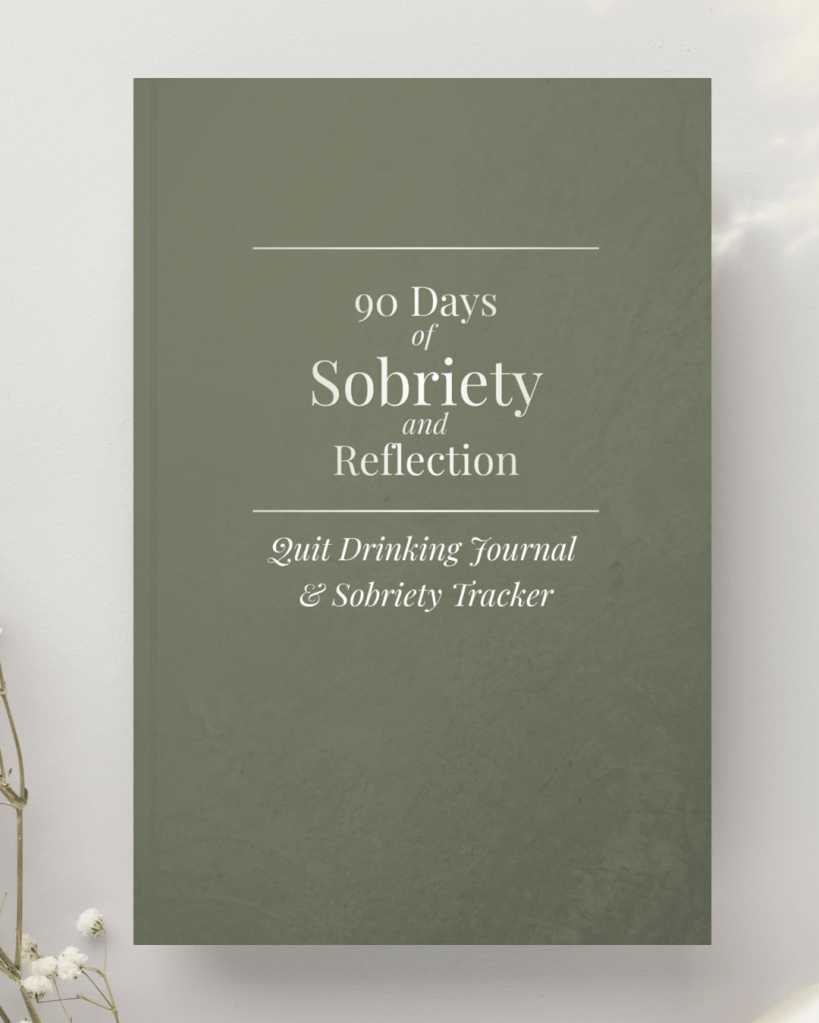
If you want a simple daily structure for early sobriety, you can find the journal here.
It is not meant to replace support, medical care, or whatever resources you may need. It is simply a steady place to keep returning to as you build evidence that you can keep going. However you decide to approach recovery, it’s important to know that it is possible. Even without a support system. All it really boils down to is the willingness to keep moving forward, one day at a time.
 Steady Next Step
Leave a comment